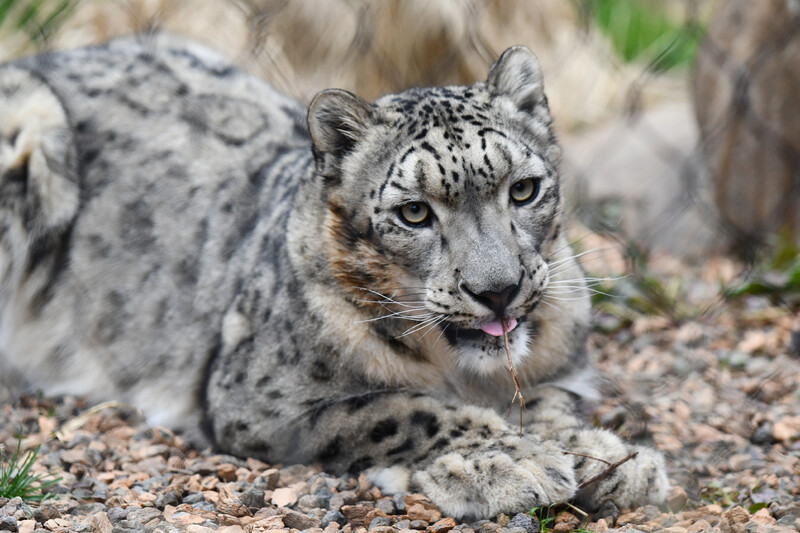
What does it mean when a snow leopard, important to species survival, is deemed effectively sterile? That was the topic of conversation at the Louisville Zoo last week after a reproductive assessment of Meru, an 8-year-old snow leopard.
The Louisville Zoo has been hoping since Meru's arrival in 2018 that he and their female snow leopard, NeeCee, would produce cubs. Zookeepers began giving them time together in 2021. As one of the 52 zoos in the United States to have snow leopards, the Louisville Zoo is an important part of the species survival plan.
Ron Evans, general curator for the Louisville Zoo, explained that "all zoos under the Association of Zoos and Aquariums, work cooperatively to manage the different populations of animals."
The objective is to maintain a healthy, genetically diverse population in captivity. Zoos no longer bring in animals from the wild unless it's a matter of housing one that's injured.
"We do everything we can do to protect wild species," Evans said. They want to bolster conservation support while working together to manage populations within the system of accredited zoos.
When everyday people get to watch and learn from animals they might otherwise never see, it means they are more likely to engage in conservation efforts and support eco-friendly policies that ensure species survival in the wild as well as in zoos. Another part of the Louisville Zoo's commitment to snow leopard conservation is that they partner with the Snow Leopard Trust and send donations to support their field work. Those donations come directly from zoo visitors, where 25 cents out of every admission and $1 out of every membership goes to conservation partners.
Snow leopards live in rugged mountain ranges of Central and South Asia, and their populations are declining. Climate crisis alone puts snow leopards at great risk because global warming could result in a loss of up to 30% of the snow leopard habitat in just the Himalayas, according to the World Wildlife Fund.
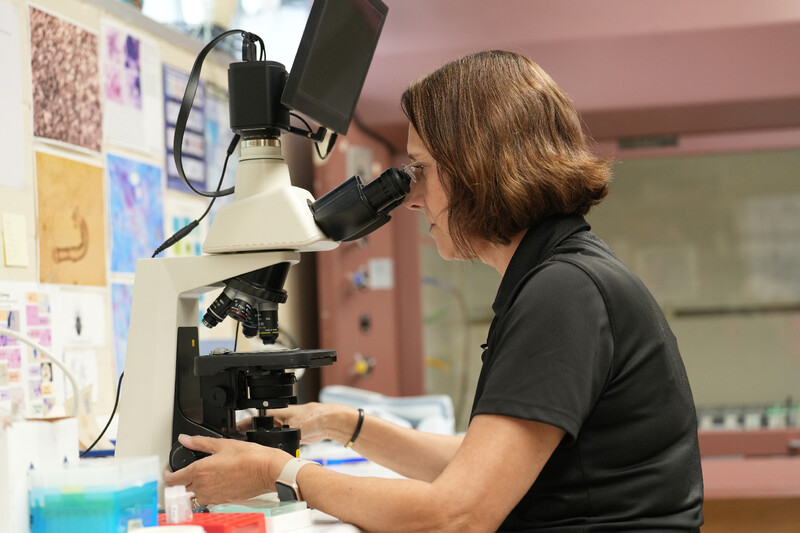
When NeeCee and Meru failed to produce cubs after several seasons, the Louisville Zoo turned to Dr. Linda Penfold, who is a reproductive biologist and the founder of the South?East Regional Zoo Alliance for Reproduction and Conservation.
NeeCee's fertility was closely monitored through fecal hormone monitoring. By shipping stool samples to Dr. Penfold's lab, they were able to check her hormone levels, and Dr. Penfold said: "We've confirmed that she's cycling. We've confirmed that she's able to ovulate."
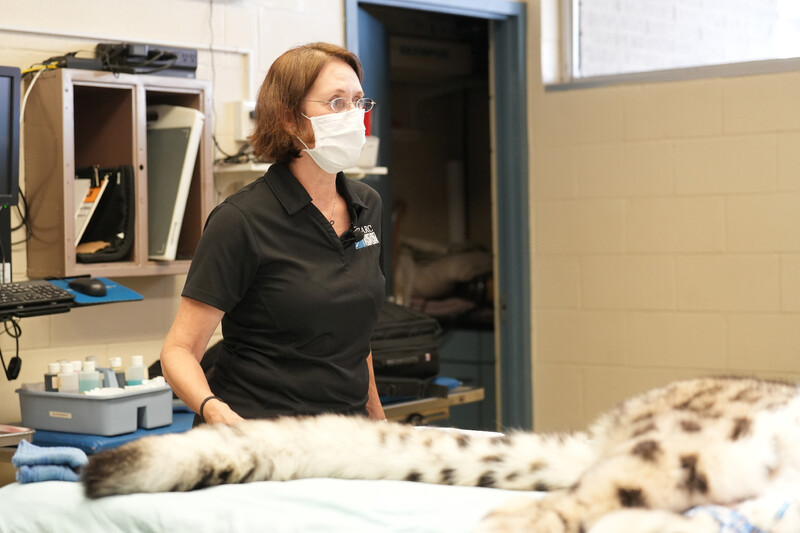
Assessing Meru's sexual health was not as straightforward. Meru required sedation to obtain a sperm sample. Once his sample was under the microscope, Dr. Penfold confirmed that "there were no sperm present." Last week was Meru's second assessment. Dr. Penfold obtained the first sample six months ago with the same results. They wanted to try again during peak breeding season, hoping that would make a difference. It didn't. The team at Louisville Zoo also monitored Meru's urine for any sperm cells without any luck.
"It's unusual to find a male who is effectively sterile," Dr. Penfold said, and "to the best of my knowledge, this is the first case that I've heard of having a sterile male snow leopard." It has a big impact on the snow leopard population in the U.S. In the species survival plan, "every animal has to share their genetic material to make sure you maintain a genetically diverse population," said Dr. Penfold.
Zoos throughout the U.S. work hard to make sure animals are all managed using a stud book, and animals are moved around to ensure the best possible genetic combinations. When genetic diversity drops, the health of the population can be compromised. Losing Meru's genes as part of the species survival plan is a disappointment.
It's not unlike how domestic animals are managed. In fact, since humans have been intentionally breeding livestock and pets for thousands of years, that foundation is what gives scientists and zoologists a jumping off point for breeding wild animals in captivity.
What does Meru's possible sterility mean for him and the future of breeding snow leopards?
Though it is not the information they wanted, it's information everyone can learn from. The Louisville Zoo will contact the species survival plan coordinator for snow leopards. "They will take that info and add it to the whole big picture population of snow leopards, and they will be able to determine what the next best steps will be immediately," Evans said.
They may bring in another male for NeeCee to mate with, or it might mean that Louisville Zoo doesn't breed snow leopards for a while. Regardless, Evans said, "It's very important that we do our part here at the Louisville Zoo...giving good homes to animals in the population."
Which brings us back to Meru. No matter what the next steps are, Meru is in good hands and will live out his life as a great ambassador for snow leopards at the Louisville Zoo.
Do you know anyone who's doing cool things to make the world a better place? I want to know. Send me an email at Bonnie@WriterBonnie.com. Also, stay in the loop by signing up for her weekly newsletter at WriterBonnie.com. To find out more about Bonnie Jean Feldkamp and read features by other Creators Syndicate writers and cartoonists, visit the Creators Syndicate website at www.creators.com.







View Comments