This year marks the 100th anniversary of Black History Month. While we celebrate this milestone, we are also grappling with efforts to remove or revise Black history in the classroom as well as the exhibits found at federal parks and museums. But Black history cannot be erased; it is preserved because individuals and communities decide to step in. One example of this is found in Michigan, and it began with state legislation to support a celebration in 1915.
The National Half Century Exposition and Lincoln Jubilee ran from Aug. 22 to Sept. 16, 1915, in Chicago. The celebration marked the 50-year anniversary of the emancipation of enslaved people. It was during this event that Carter G. Woodson co-founded the Association for the Study of African American Life and History with the purpose of creating and distributing Black history. Woodson would then go on to establish "National Negro Week" in 1926, which later expanded to Black History Month in the 1970s.
However, in 1915, the focus was on post-Civil War progress. This is the part where Michigan comes in with something special. I attended the Detroit chapter of ASALH's Black History Month celebration last week where I learned about Gov. Woodbridge Ferris' efforts to document Black achievements for the state.
The Michigan Public Act 47 of 1915 passed easily with only 10 dissenting votes. It authorized the creation of and funded a commission to "collect, prepare, install and care for ... an exhibit of inventions and handiwork; in art, science, manufacture and agriculture; and to prepare a manual showing the professional, political, religious and educational achievements of citizens of this state in whole or in part of Negro descent."
With only three months to compile their research, the nine-member commission put together an impressive record of Black Michiganders titled "The Michigan Manual of Freedmen's Progress." The book covered the 50 years since emancipation and chronicled property owners, professionals and those engaged in politics, as well as the more than 1,600 Black Michigan soldiers who had fought in the Civil War. The commission knew their data was not exhaustive given the time constraints, but they also understood the importance of their work.
The Commission Secretary Frances H. Warren noted in the book's preface that the newspapers in 1915 were more likely to report on the race of an individual when they were reporting a crime. "On the other hand," Warren wrote, "when many of the newspapers mention anything commendable about a Black man, his racial character is not mentioned." Warren believed this reporting practice fed the growing hostility toward people of color and influenced the Black Codes in legislation as a result. Therefore, the opportunity "to present to the world the other side of the story of the black man," Warren wrote, was "peculiarly fitting."
Michigan was one of 18 states showcased at the Lincoln Jubilee and Gov. Ferris was a featured presenter.
In the years following the Jubilee, America would settle into the Jim Crow era with segregation and discrimination affirmed in policy, culture and law. "The Michigan Manual of Freedmen's Progress" would sit on a shelf until 1959.
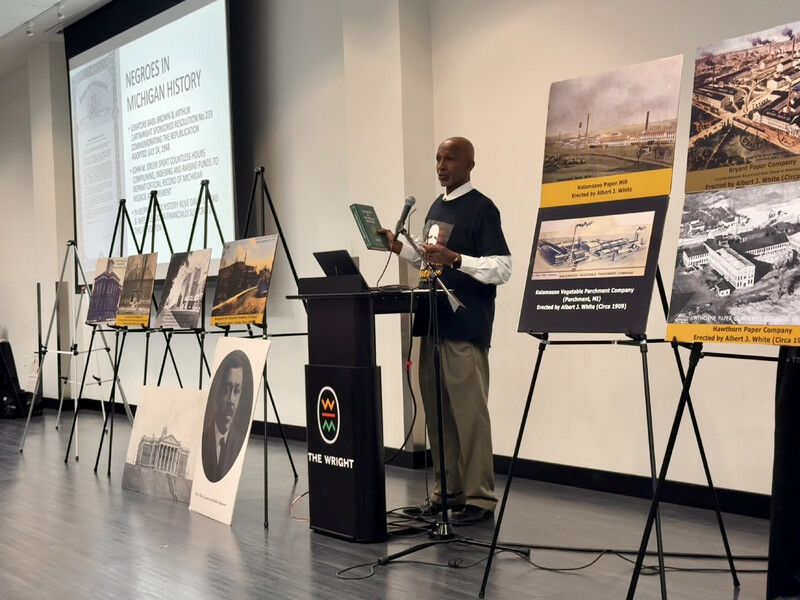
Lila Colby, a state of Michigan librarian, showed the book to John Green, a historian, archivist, and journalist working for then-Secretary of State of Michigan James Hare. Green became enthralled with its contents and noticed the book lacked an index. He received permission to index it and republish it under the title of "Negros in Michigan History."
Green went on to publish four editions of the book and by 2020, it was time for David L. Head, the founder of the David L. Head Foundation, to step in. John Green was his mentor, and Head not only funded the 2015 printing of Green's book, but he also made plans for volume two. He wants to pick up where the book ends and chronicle Michigan's Black history from 1915 to 2015. Head said, "I feel like I'm carrying the torch for John Green now," as Green recently died.
Black history has never survived by accident. It has endured because people chose to gather it, print it, index it, fund it and pass it forward. For every person or administration that wants to stifle Black history, there are others doing the work to preserve it. That is the real legacy of Black History Month. It's not just a commemoration, but a continuation, and as David Head said, "We got work to do."
Do you know anyone who's doing cool things to make the world a better place? I want to know. Send me an email at Bonnie@WriterBonnie.com. Also, stay in the loop by signing up for her weekly newsletter at WriterBonnie.com. To find out more about Bonnie Jean Feldkamp and read features by other Creators Syndicate writers and cartoonists, visit the Creators Syndicate website at www.creators.com.







View Comments