Toward the end of the spring semester, I sent a final email to students in my Sports Icons class at Ohio State University's Lima campus regarding the NAACP's proposed boycott urging Black football players to avoid attending Power 4 conference schools in Southern states that have redrawn their congressional and local legislative districts. I explained that the NAACP is calling on elite Black athletes to take this action due to the Supreme Court's Louisiana v. Callais ruling in April. The NAACP launched its "Out of Bounds" campaign a week after I messaged my students, and although the boycott is not currently dominating sports headlines, it could intensify as we get closer to the college football season and the Nov. 3 midterm elections.
Power 4 schools are rounding out their 2027 recruiting classes, so if a Black elite five-star athlete announces he is going to play ball in the Midwest instead of the South due to redrawn district lines in Florida, Tennessee, Louisiana and Alabama, imagine the impact his decision would have. I have seen comments on social media from people arguing that Black football players should steer away from SEC teams and focus more on Big 10 schools, which now include the former Pac-12 universities University of Southern California and University of California, Los Angeles, citing these institutions' progressive histories. In my sports class, students learned about UCLA's five outstanding football players from the late 1930s: Kenny Washington, Woody Strode, Ray Bartlett, Tom Bradley and Jackie Robinson. We also spent considerable time in class discussing Ohio State's legendary track athlete, Jesse Owens, and how he had to make a substantial decision regarding the NAACP's request that he not compete in the 1936 Olympics. The NAACP believed that if Owens did not go to Berlin, that would send a strong message about Blacks protesting the Nazi regime. My students found it quite intriguing how the Owens biopic "Race" depicted Jesse weighing this choice, as his father told him not to be swayed by political leanings. When it comes to the power dynamics being discussed regarding Black football players on SEC teams, another important historical fact that I believe my students will recall from our class discussions is the 1970 game between USC and Alabama, where the Trojans' star running back Sam "Bam" Cunningham ran for over 200 yards, leading his team to a 42-21 blowout of the Crimson Tide. I showed the class a clip of Grambling University coach Eddie Robinson, featured in the 1996 documentary "The Journey of the African-American Athlete," in which he recalled a conversation with a White Alabama colleague at the American Football Coaches Association conference following USC's victory. Robinson remembered this coach stating that Cunningham had done more for the integration of football in the South than all civil rights leaders combined. This is the same type of power and influence the NAACP is telling Black athletes they have today.
So far, it does not appear that Black athletes are strategically mobilizing to boycott Southern schools, and there are other issues to consider, mainly name, image and likeness deals, which college football powerhouses use to pay highly recruited players. For many Black athletes whose families are struggling financially, NIL deals serve as a starting point to build generational wealth. Also, an athlete being heavily recruited by a Southern school may not hold any scholarship offers from the Big 10 or Big 12. Not many athletes would be in a position to make such a tremendous sacrifice if an SEC school has presented them with a life-changing offer. Another factor that I think is important to many players is their Christian faith. I have noticed recent posts on X from Black high school athletes praising God and citing specific scriptures as they testify of their success. For example, four-star defensive lineman Zahmar Tookes just committed to Florida, highlighting Joshua 1:9, where God told Joshua to "be strong and of a good courage," and four-star linebacker Isaac McNeil committed to Auburn with a shout of "Thank you, God!" I also expect to see some athletes share that God led them to the school of their choice, not only to pursue their football dreams but also to minister. Many people would scoff at a statement like this, given all the NIL endorsement opportunities available, but for young men following Christ, money would not be the driving force in their decisions, and God's guidance would also override political pressure.
Time will tell if the Out of Bounds boycott ushers in a noteworthy, historical change in college athletics. I hope highly recruited Black athletes prayerfully consider all their options, and I also hope my students have a better understanding of how race, politics and sports intersect.
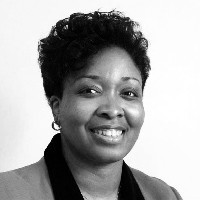
Dr. Jessica A. Johnson is a lecturer in the English department at Ohio State University's Lima campus. Email her at smojc.jj@gmail.com. Follow her on X: @JjSmojc. To find out more about Jessica Johnson and read features by other Creators Syndicate writers and cartoonists, visit the Creators Syndicate website at www.creators.com.
Photo credit: Ryan Reinoso at Unsplash






View Comments