Q: I have a few houseplants that stay indoors all year. Last summer, I received a couple of gift baskets with plants in them. Last fall, I repotted the plants into larger separate pots. The plants grew well, and I brought them in for the winter. I live where it is very cold all winter. The new plants are not doing well at all. They are dropping a lot of leaves. The soil in the pots stays wet all the time. I haven't found any pests. What can I do to save the plants? Should I fertilize them? There is a Schefflera, a Spathiphyllum, a small palm, a pothos vine, a kalanchoe and a couple of others I don't know the names of.
A: It can be very disappointing when you receive gift plants and they don't do well under your care, especially if you are the plant person in your group.
Plants in gift baskets are usually packed in tightly to make them look nice and full. They are usually small, young plants of large-growing species. For instance, Scheffleras can grow 30 to 50 feet high, but in the gift basket, they are under 2 feet tall.
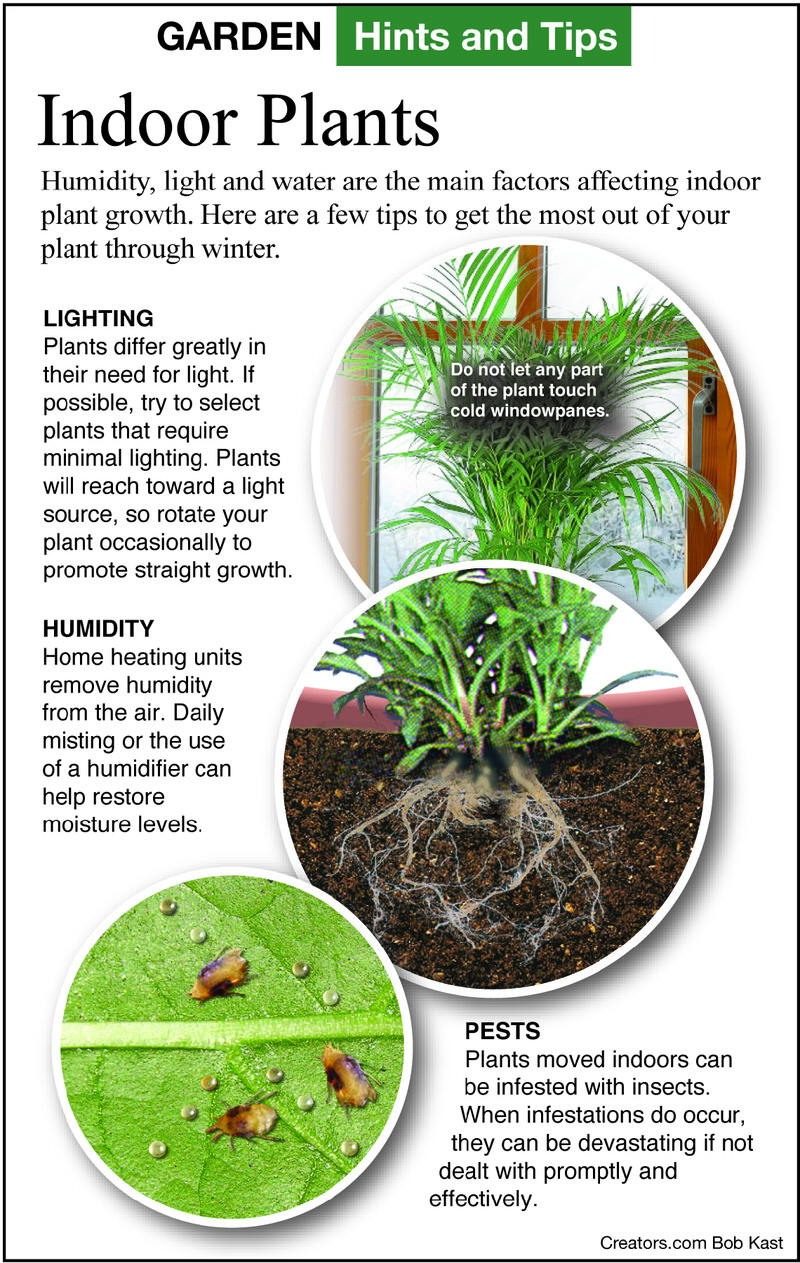
Are your plants near doors where they get cold drafts? Are they near heating vents where they get exposed to long blasts of dry air? In either of these cases, the plants will not do well, and they should be moved. When you water, use lukewarm water, as tropical plants don't get rained on with ice-cold water.
Repotting them is a good idea, but if they are planted in the fall and then brought indoors for the winter a few weeks later, they may not have grown very many roots into the new soil in the pot. Without roots in that soil, water will remain in the pores in the soil, preventing air from moving into the soil. The roots need oxygen in the soil, or else they will suffocate.
At the same time, the top of the plant started to receive less light because it is indoors. The existing leaves were created under bright sunlight conditions and were thicker than the leaves necessary for photosynthesis under indoor light. Many plants lose leaves when switched from one sunlight condition to another. The new leaves will be adapted to the indoor lighting, humidity and wind conditions.
As longtime readers will remember me saying, there is a biological balance between the top and bottom of a plant. A plant can't have more leaves than the roots can supply with water, and it can't have more roots than it can supply with food. Your plant's roots may be rotting due to the excess water in the pots. Fewer roots means fewer leaves. The low light level indoors is causing the plants to drop leaves, so there will be less food to grow more roots. The plants are trying to come to a balance between the top and bottom of the plant.
If possible, give the plants more light. Move them closer to the windows or add a cheap floor lamp that can be aimed at them. Do the plants need to be rotated so the leaves face the window for more light?
Do a test of the roots by giving the plant a tug. If it is easy to lift out of the pot, how are the roots doing? If they are still white and growing, stick the plant back in the pot. If they are starting to rot, prune them back and replant them in smaller pots.
The plants are in a winter dormancy time frame, so don't expect them to be growing a lot of new leaves at this time of year. They are in a bit of a holding pattern, but we don't want them to be fading away. Many plants have a pattern of root growth before new leaf and branch growth, so if the roots of your plants look good, there is room for optimism.
Don't fertilize them yet. Wait until late March. Then use a slow-release fertilizer by following label directions. When the weather warms up, set them outdoors in the shade for a couple of weeks before moving them into more sun.
DIST. BY CREATORS.COM







View Comments