Dear James: We have too many books, magazines and other stuff laying around, so I plan to build some simple bookcases or shelves. What are some tips for building sturdy ones? — Tiffany P.
Dear Tiffany: It's amazing how stacks of books and magazines seem to reproduce and grow on their own. You should be able to build some functional, yet attractive, wooden shelves in just several hours. With just a little extra trim and another hour or so of work, they can be attractive enough for your living room.
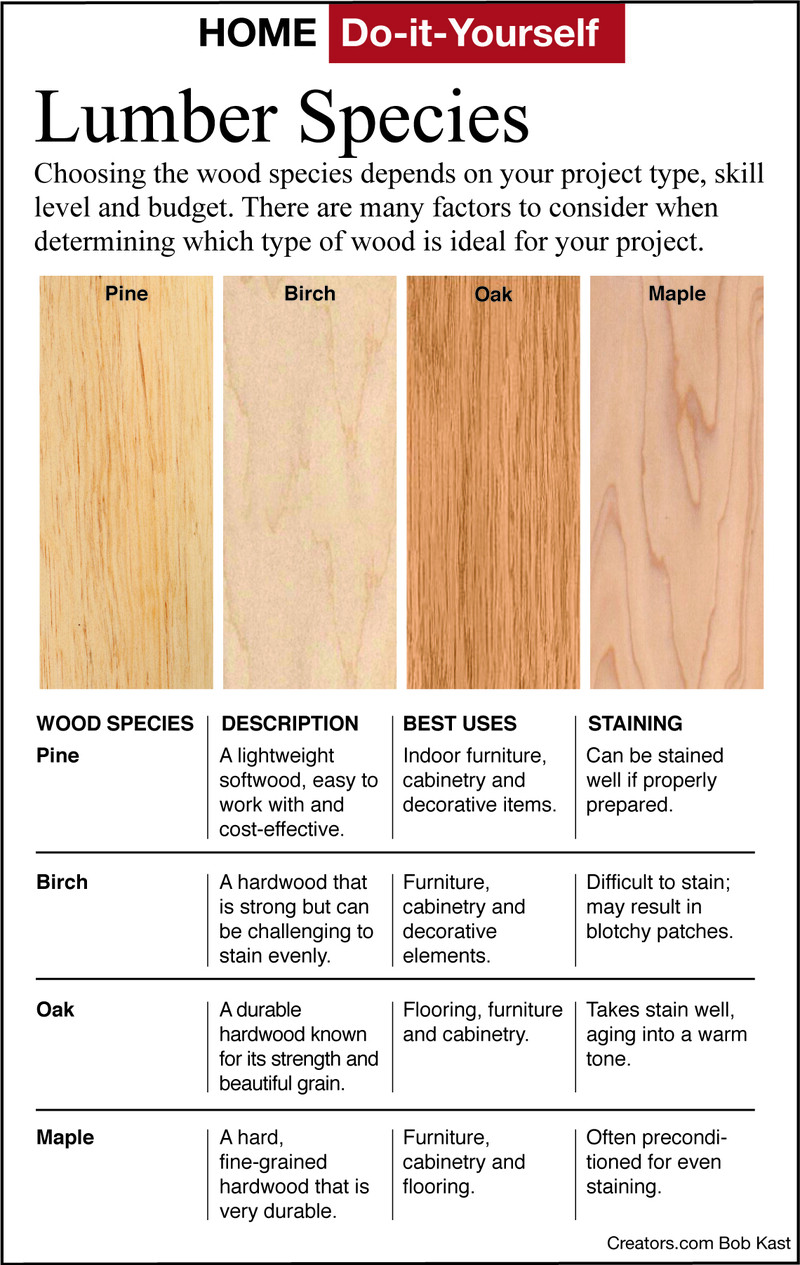
Selecting the proper type of wood for the shelves can make a significant improvement in how they look and function and in their cost. No. 2 pine boards are commonly used and are relatively inexpensive at just a bit over $1 per foot.
These pine boards are easy to saw and assemble, take paint well and have a rustic appearance with the rough knots. The quality can vary, so inspect each piece carefully to make sure it is straight and flat. You may have to fill some of the knots with wood filler. It is not a good wood if you want to stain it with a natural finish.
Clear pine has all the benefits of No. 2 pine board without the knots or other flaws. The drawbacks are that it's about three times more expensive and stains very poorly. Either leave it the natural color and finish it with clear urethane or paint it.
Birch, oak and maple boards are very attractive, but even more expensive than clear pine. These attractive woods are usually finished naturally, but maple and birch will take paint well. Oak is more difficult to paint smoothly. Since these are fairly hard woods, they are more difficult to cut, sand and nail or screw together.
Birch plywood is a reasonably priced option. It is attractive, smooth, flat and strong. It cuts and nails easily, and you can finish it with paint or a clear natural finish. It does not stain well, and you must cut the shelves from a 4 foot by 8 foot sheet. For a professional appearance, the exposed cut edges will have to be covered with a veneer.
Oak plywood is slightly more expensive than birch, but it takes a stain better. Fir plywood is inexpensive and is easy to work with. The smoother grades (code AB) will also accept paint well. As with any plywood, the cut edges should be covered. Particleboard is the least expensive material, but avoid the temptation to buy it. It is weaker and not easy to cut or nail.
When planning your shelf/bookcase project, first determine what items you want to store on the shelves. This will help you determine if any shelves will require extra support for heavy items and the depth of the shelves.
As a rule of thumb, the following are some standard shelf depths for common items: compact discs — 6 inches; paperback books — 9 inches; average books and magazines — 11 inches; display books and record albums — 13 inches; and stereo equipment — 17 inches.
Three feet is a good stable height for most shelving. If you make it much higher than this, it can become unstable and tip over, especially when young children decide to use it for mountain climbing. Attach it securely to the wall.







View Comments